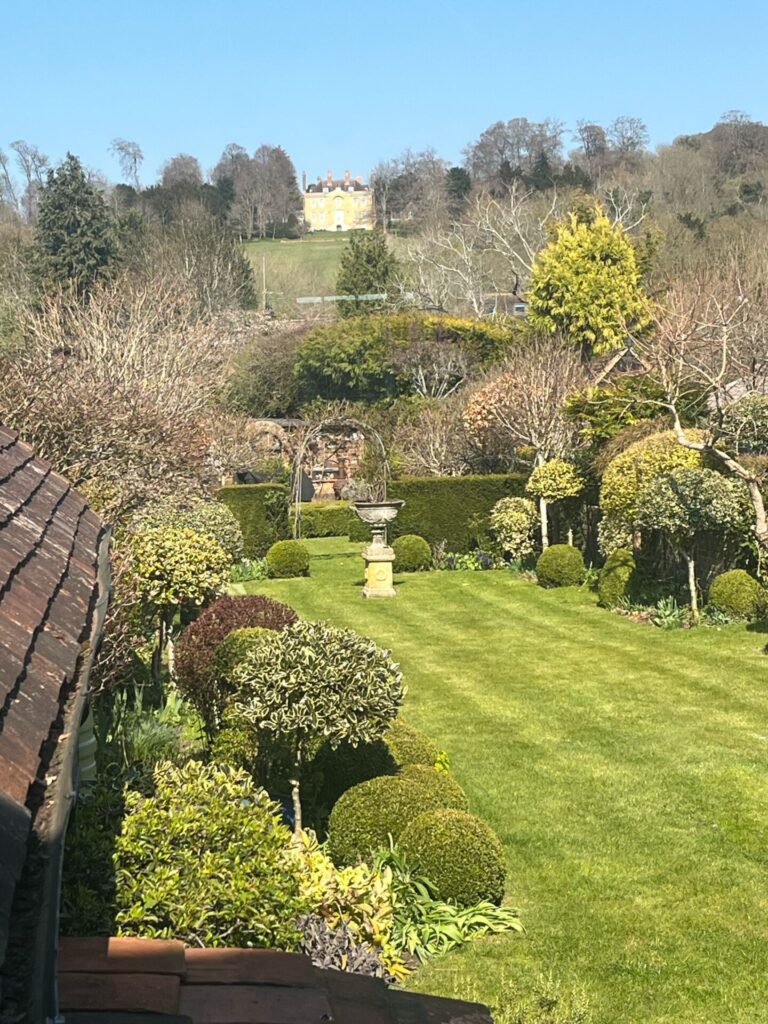
Our April visit took us to Amersham – another first for our group.
Amersham is a market town in Buckinghamshire with a population of approx. 20,000.
There are two distinct areas:
• Old Amersham, set in the valley of the River Misbourne, containing the 13th-century parish church of St. Mary's and several old pubs and coaching inns.
• Amersham-on-the-Hill, which grew in the early 20th century around Amersham station, which was served by the Metropolitan Railway (now the Metropolitan line) and the Great Central Railway.
Records date back to Anglo-Saxon times when it was known as Agmodesham, and by the time that the Domesday Book was written in 1086, it had become known as Elmodesham.
The area of the town now known as Amersham-on-the-Hill was referred to as Amersham Common until after the arrival of the railway in 1892. After this date the growth of the new area of the town gradually accelerated, with much work being done by the architect John Kennard. It is now known as "Amersham-on-the-Hill", "Amersham Town" or the "New Town".
Amersham station is a terminus of the London Underground's Metropolitan line. It is 23.7 miles northwest of Charing Cross, making it the second furthest Underground station from central London and the second most westerly station of the whole London Underground system.
Early trade at Amersham Market was in local grain, much of which was sold to London merchants. During the 17th century and 18th century a key industry in the town was brewing.usually for a rural area, Amersham Brewery, a common brewer was established in the early 1600s, the earliest known brewer is Giles Watkins, who was born in Amersham in 1579.
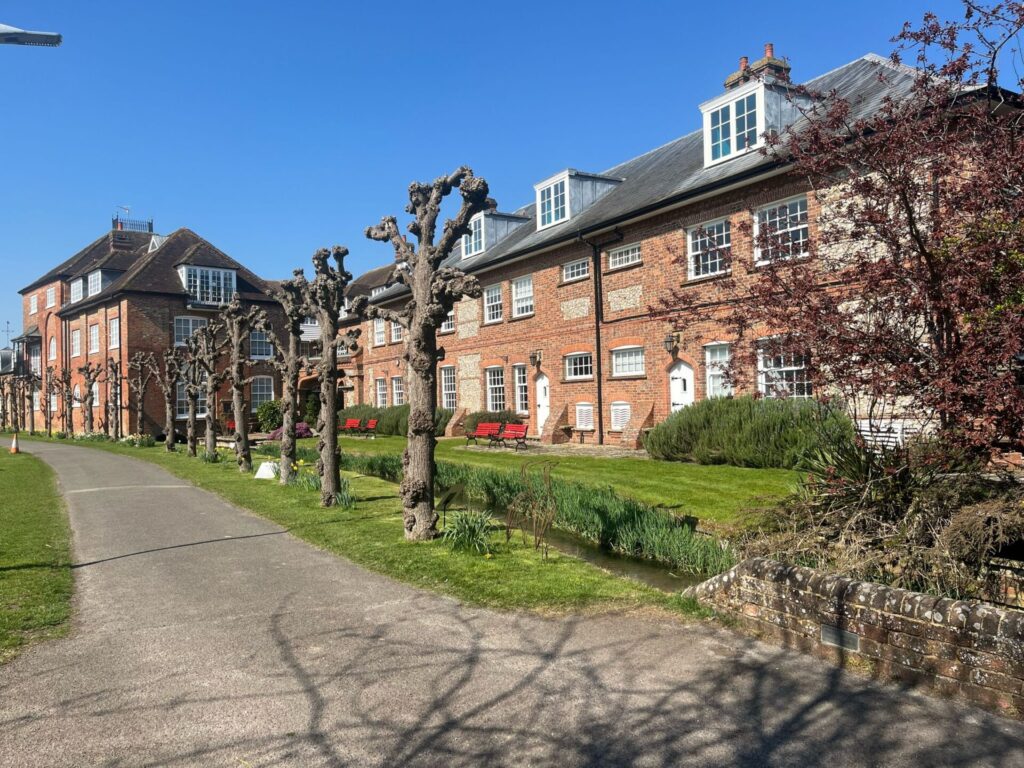
The former brewery buildings are now converted to offices and apartments.
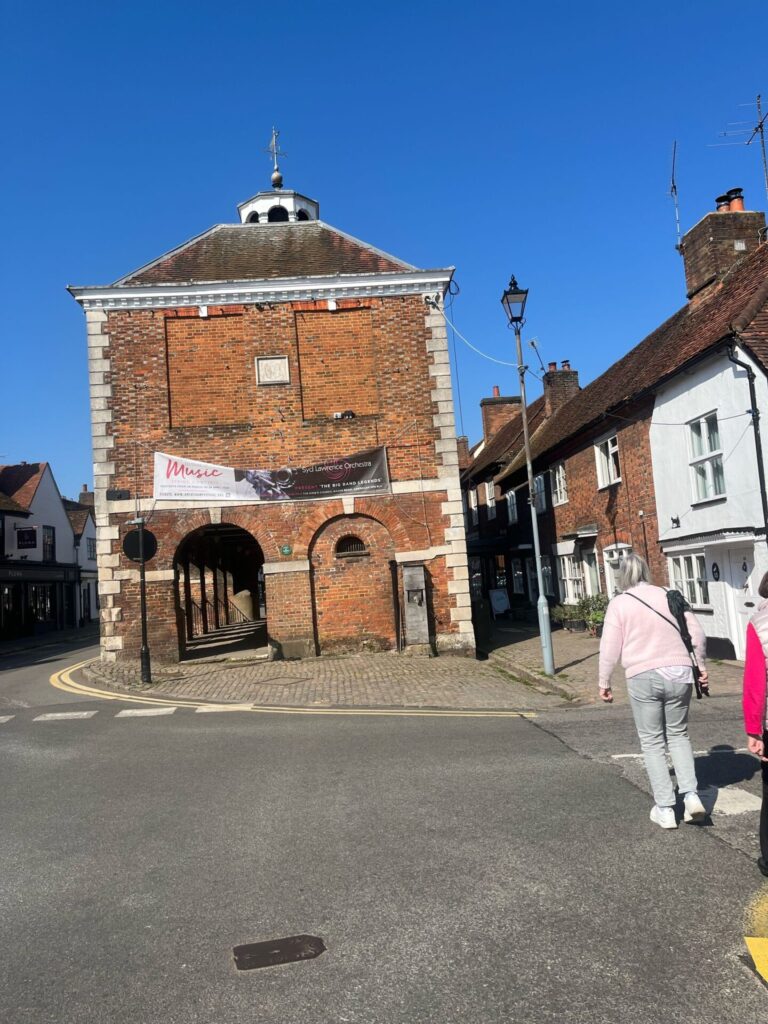
Old Amersham Market Hall is a Grade II listed building dating back to the 17th century.
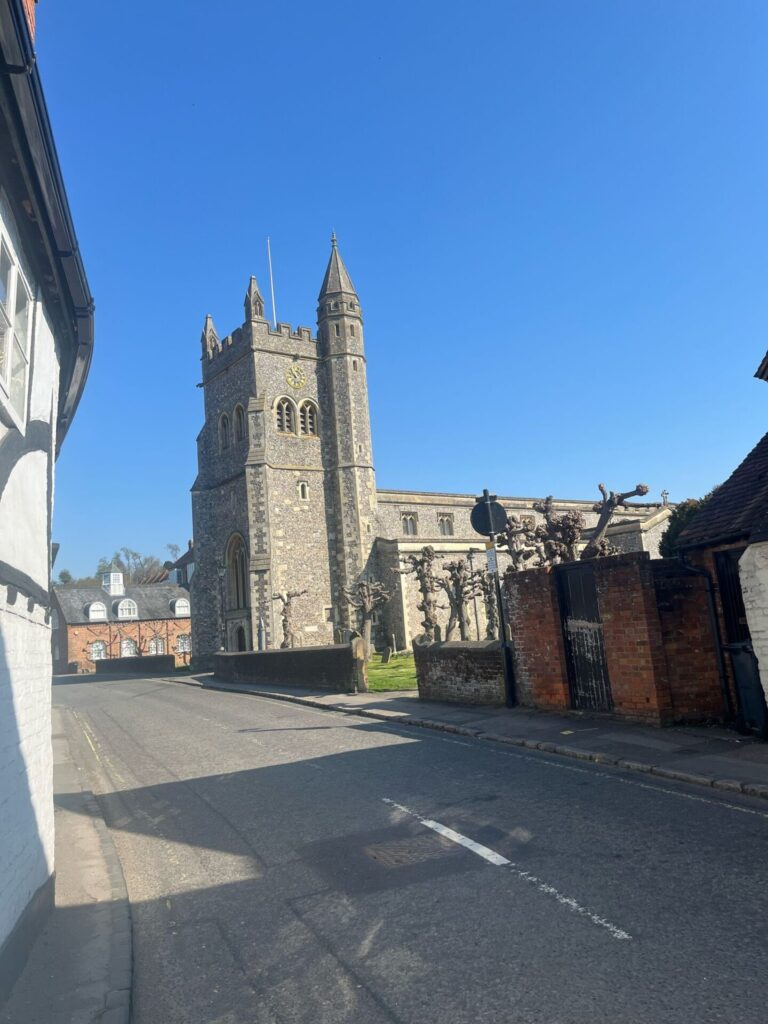
In Old Amersham stands the Grade I listed Church of England St Mary's Church, a 13th-century building that has been altered over the years. The present exterior is largely Victorian but the building contains a 14th-century font, 17th-century glass from Lamer Manor in Hertfordshire, and monuments in the chancel and in the Drake Chapel to 17th- and 18th-century notables.
Buildings opposite church with a view
of the River Misbourne.