In September we had a special treat with a 2 part visit. Anne put a lot of work into arranging a tour of the lovely little village of Southwick, followed by a visit to Southwick House, which is owned by the MOD and contains the map room with the plan of the D-Day landings.
We started the day by meeting for coffee at the Southwick Golf Club and then, one of our most popular guides, Andrew Negus, gave us a tour of the village.
Southwick is a small village with a population of approx. 2,000. It was initially the site of Southwick Priory, which was built in the 12th century. On the dissolution of the monasteries during the Reformation the estate, including the village, was granted to John Whyte. The estate is still owned and managed by his descendants.
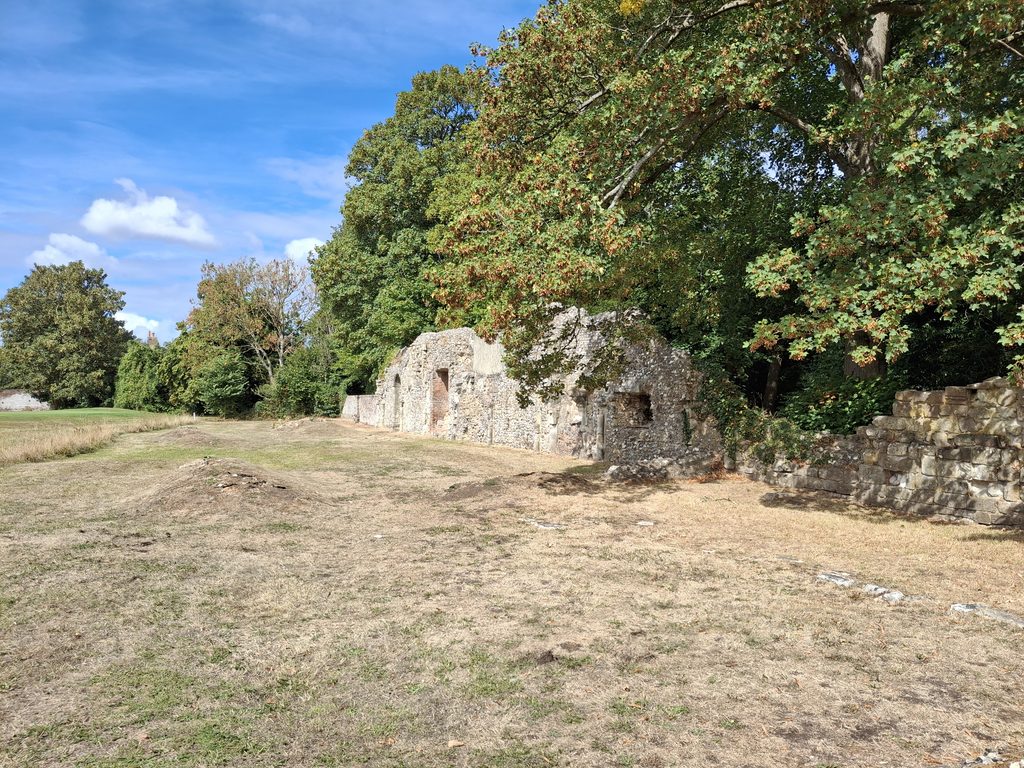
Southwick Priory:
Today only part of the refectory wall remains
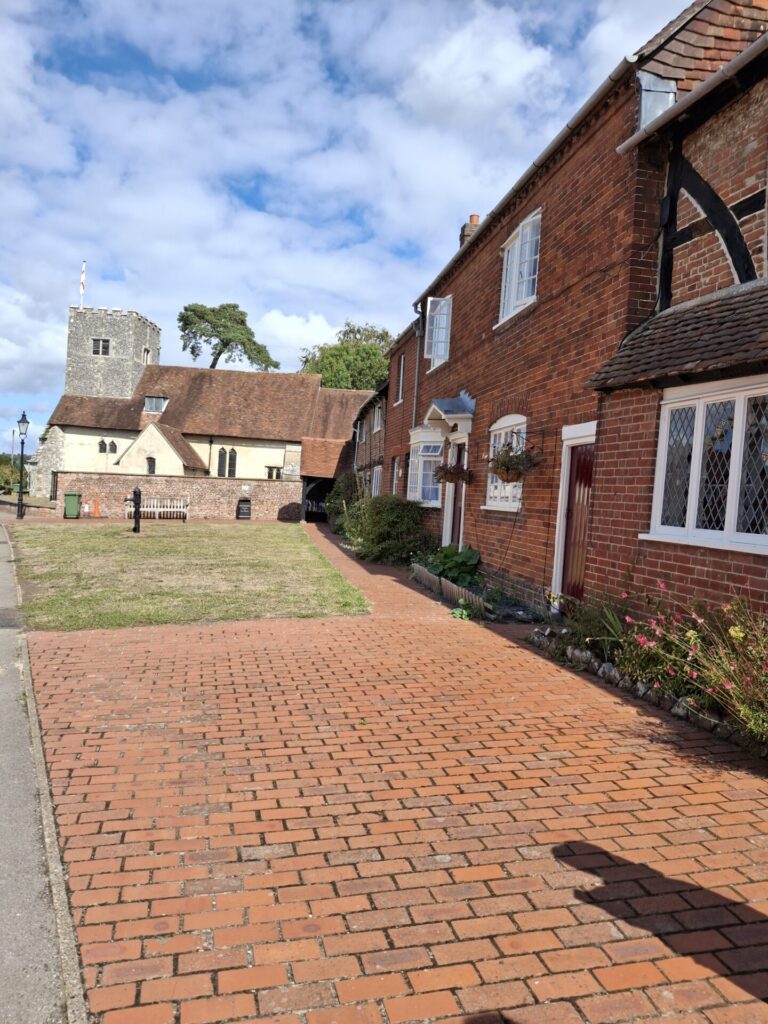
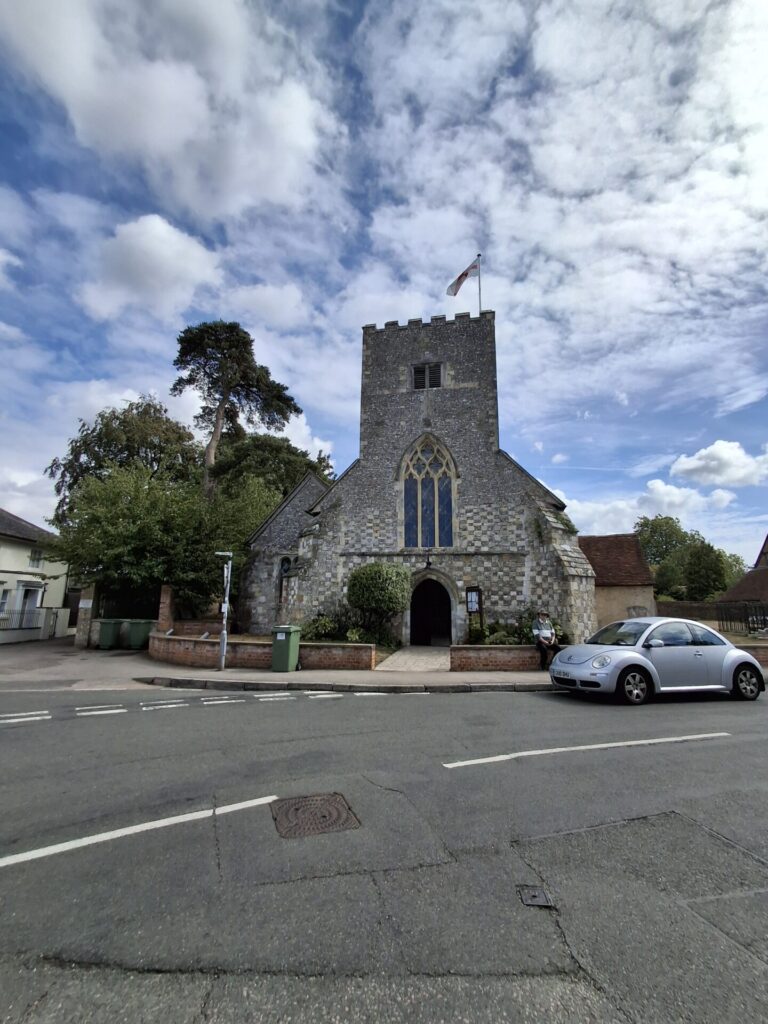
Southwick is rare in that the village is still entirely owned by the Southwick Estate (except for Church Lodge). The most obvious sign of this is that all the houses, except manor houses, have dark red-painted front doors – a condition laid down in the tenancy agreements. The only exceptions are the White House, the residence of the vicar and Church Lodge. Church Lodge is the only privately owned house in the old village. The church itself, St James, is a Grade I listed early medieval building.
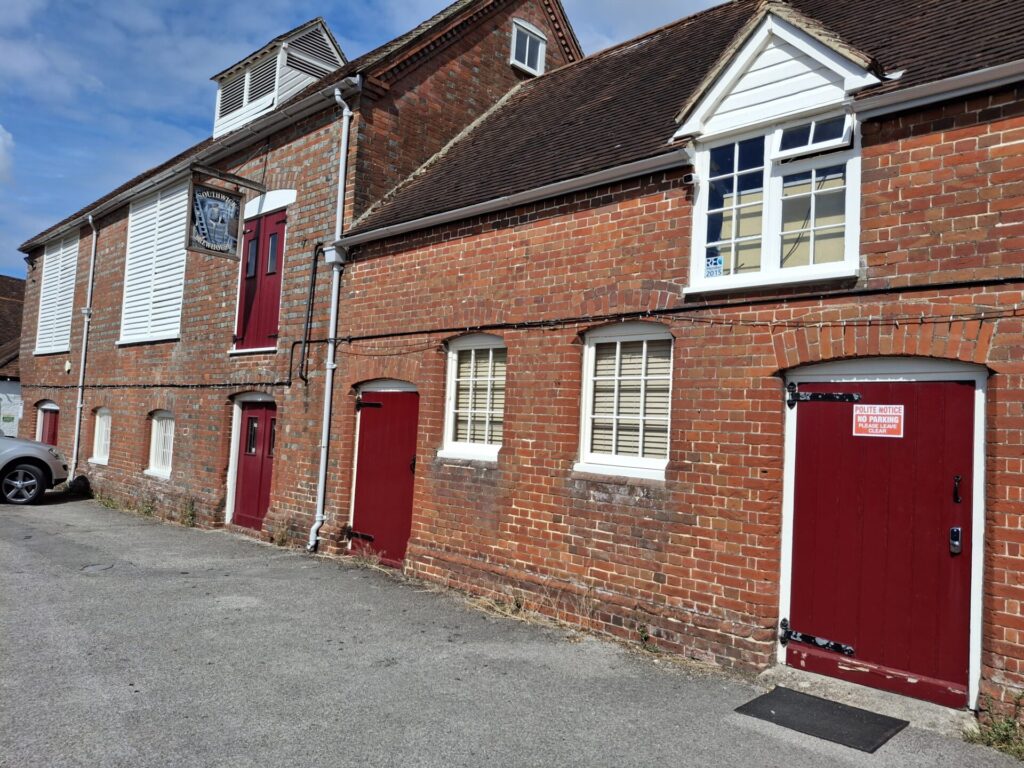
Hidden behind the Golden Lion pub is an original Victorian brewery in pristine condition. With 12-barrel capacity, the beer was sold directly from the fermentation vessels in the tap room or racked in cask for sale in local pubs.
The brewery dates to 1844 and produced beer until 1957 when Dick Olding, the last brewer retired, aged 81. A memorial brew was made in 1985 but the brewery has been mothballed since then.
Southwick probably represents the best example of a complete 19th century brewery in England and is preserved by the current owner and English Heritage.
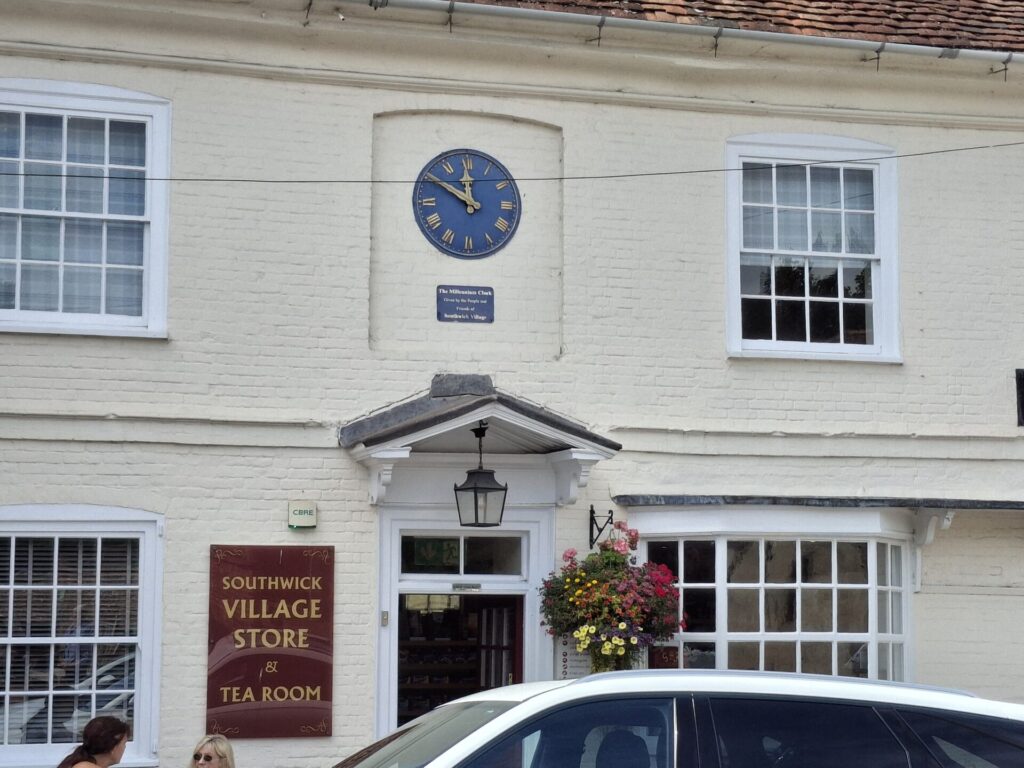
There are 2 pubs in the village but only one small shop.
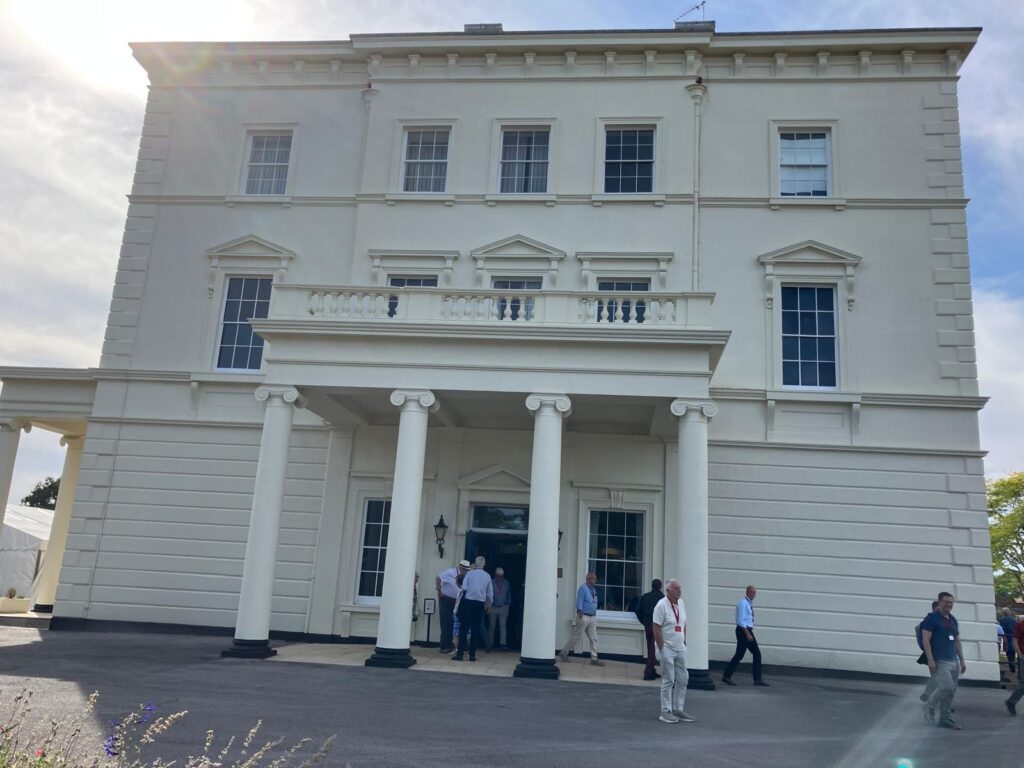
Southwick House, a new manor house was completed in 1813. It was gutted by fire in 1838 and then renovated and rebuilt by 1841. The house and part of the estate was requisitioned during WW2 and used as the SHAEF headquarters for Operation Overlord. The nearby Golden Lion public house, according to those there during this period, was frequently used by numerous senior American and British generals. Since then, the house has been used by various branches of the armed forces.
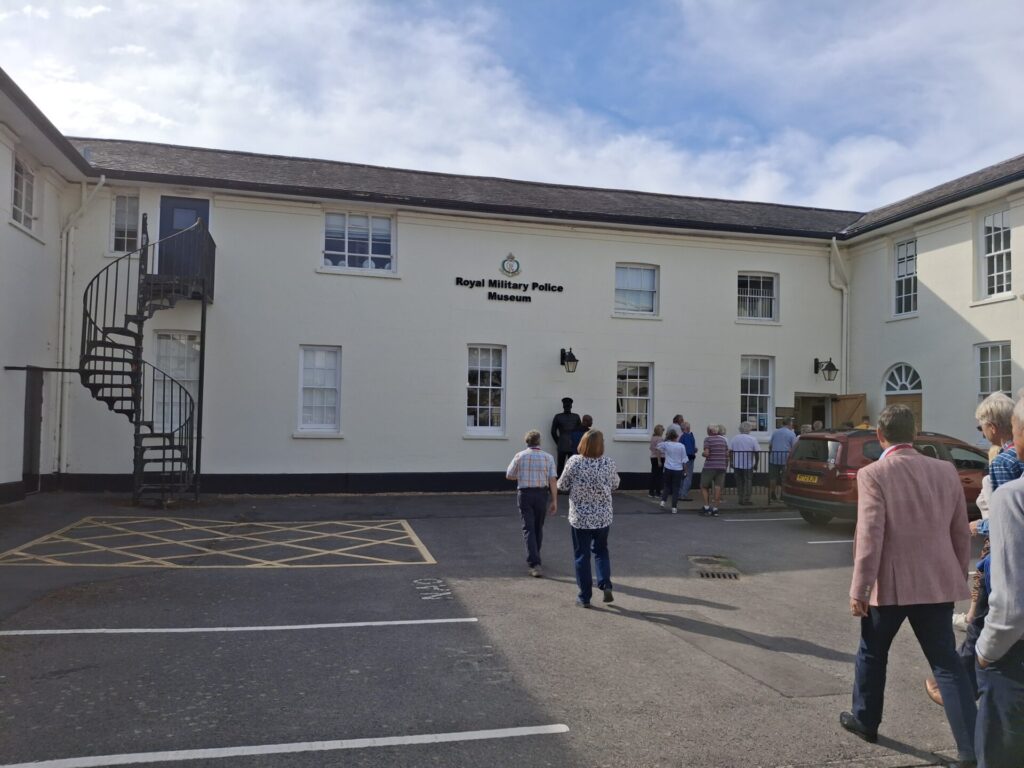
We had time to look around the Military Museum, which was very interesting.
The maproom was, of course, the highlight of the visit. We were given a very interesting talk telling us all about the planning of D-Day and the part that Southwick House played in it.
